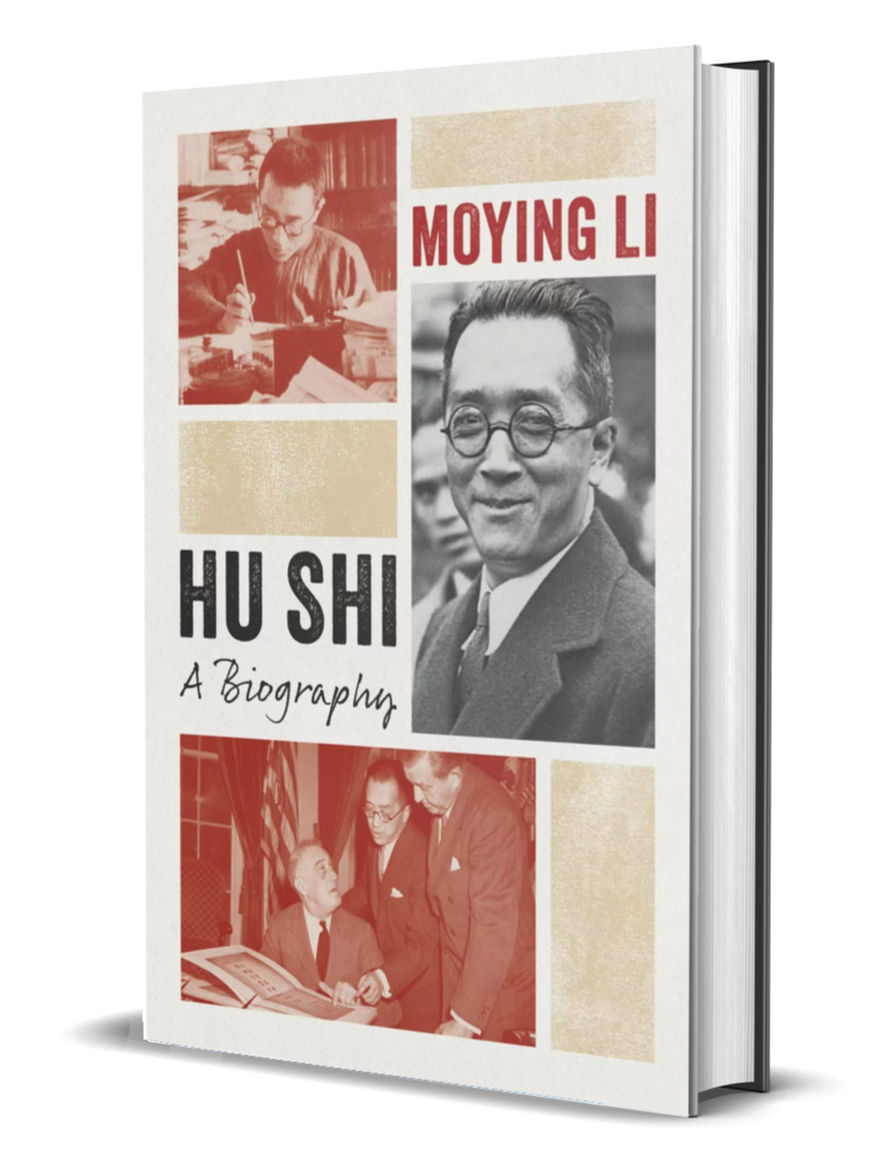
Hu Shi - A Biography
Hu Shi, the Chinese ambassador to the United States, a former dean at Peking University and a soft-spoken intellectual, lost his temper during a meeting with President Franklin D. Roosevelt. It was an extraordinary behavior at an extraordinary time. Since his appointment three years earlier by Generalissimo Chiang Kai-Shek, Hu Shi had tried, with determination but with tact, to push the officially neutral U.S. into involvement in the war that had engulfed the rest of the world and had been ravaging his nation since the Japanese first invaded it in 1931. China’s existence was suspended in the balance. Indeed, as he had said on many occasions, his homeland was “bleeding to death.”
He could not contain himself, however, when, in early December 1941, he learned that Japanese envoy Saburo Kurusu seemed to have pushed FDR closer to giving in to a Japanese ultimatum. Hu Shi asked to meet with the president. In the Oval Office, he protested any move to play into the Japanese hands, reminding the president of the many assurances he had made to help China whose suffering had reached an unprecedented scale. Three million people—soldiers and noncombatants—had perished; the country had lost most of its resource-rich cities in the north, the coast, and along the Yangtze River. Over sixty million people —nearly half the population of America at the time—had been driven from their homes, shops, farms, and villages. Hu Shi had pressed the point consistently since assuming his post in 1938, even as he appreciated the enormous pressure FDR faced from the overwhelmingly isolationist American electorate to stay out of the war.
After their tense encounter, Hu Shi was relieved when, a few days later, in the early afternoon of December 7, he was called back to the White House. He noted that FDR’s mood had changed. This time the president did more than listen. Speaking to Hu Shi as if he were an old friend, a gift for which FDR was famous, he told the Chinese ambassador that the U.S. would not compromise. “You can tell Generalissimo Chiang about it right away,” the president said. “But from now on war can erupt any time in the Pacific. It can happen in the Philippines, Guam, or other places.”
Hu Shi was the last diplomat the president met on that fateful morning. Rushing back to the Chinese Embassy to send home the good news, Hu Shi had scarcely caught his breath when the phone rang. It was the president again. “I want you to be among the first to know,” FDR told him. “The Japanese have bombed Pearl Harbor.”
When Hu Shi put the receiver down, he knew that things were about to shift dramatically. It was a moment of both tragedy and vindication. Hu Shih had helped keep China and U.S. together and won the greatest triumph of his career, hailed Life magazine.